In furtherance of the bilateral partnership between the U.S. Department of State Chemical Security Program and Pakistan’s National Authority to the Chemical Weapons Convention (CWC), this program will equip Pakistan’s first responders and emergency medicine physicians (EMPs) representing hospitals from Islamabad, Karachi, Lahore, Peshawar, and Quetta, to respond to a chemical incident. Having a well-equipped network of EMPs and first responders in each of these cities can limit casualties from chemical weapon (CW) attacks. Local emergency medical teams are the first to respond to CW incidents and are thus responsible for providing initial assessment, scene surveillance, and gathering evidence. To reduce casualties and ensure that downstream attribution and prosecution efforts are possible per Pakistan’s national legislation under the CWC, they must be able to manage CW incidents quickly, safely, and accurately. This training will ensure that participants can meet these needs by training them to recognize CW attacks, limit casualties through effective first aid and decontamination, collect evidence, and support incident investigations and government reporting via Pakistan’s National Authority to the CWC to the Organization for the Prohibition of Chemical Weapons (OPCW).
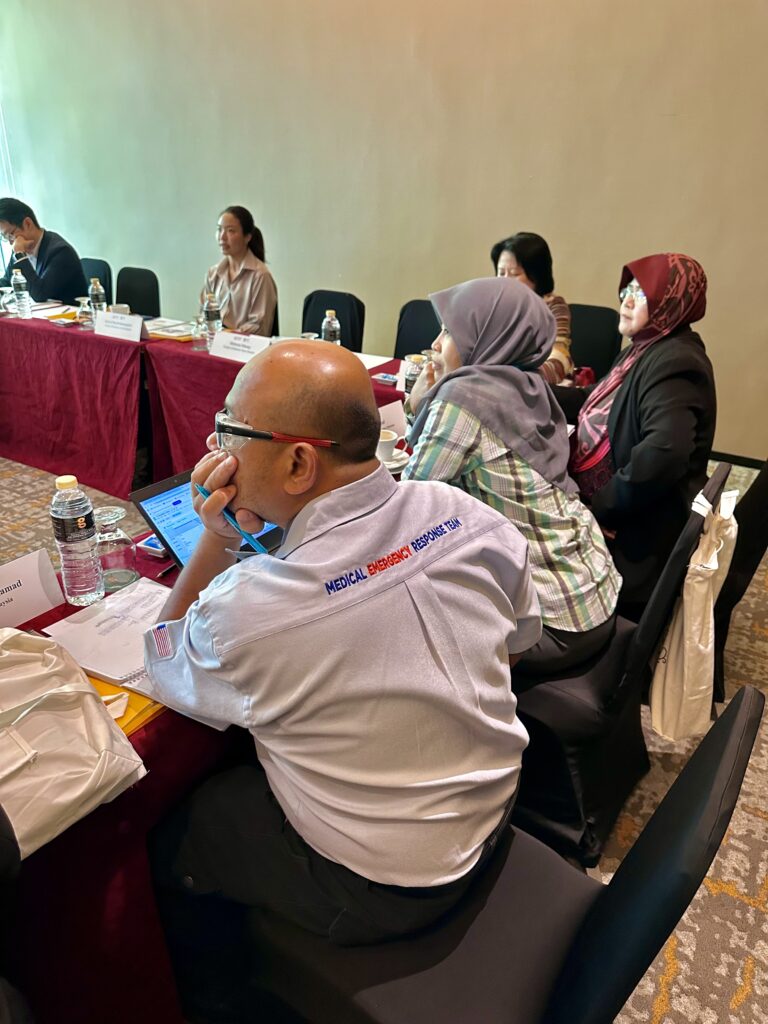
Integral Global will design and implement a three-day training event in Islamabad, Pakistan, for 25 EMPs and first responders from Islamabad, Karachi, Lahore, Peshawar, and Quetta. To address the above objectives and competencies, participants will engage in lectures, case studies, hands-on exercises, discussions, and document development.
Training topics will include, but are not limited to, chemical agents of concern, the role of healthcare workers in the incident attribution process, scene recognition and management of key chemical toxidromes, antidote use, evidence collection, decontamination and first aid, PPE use, conducting an incident investigation, and cross-sector coordination.